Meditation is a journey to the center of your inner self—a journey that can only begin when you withdraw your attention from the outer world. To progress, two things are required: relaxation and concentration. Deep relaxation not only allows us to be still for meditation, but when relaxed, we are also less likely to be made restless by a multitude of subconscious messages from the body. As you progress in your meditation practice, mental restlessness will be your main enemy. The only way to defeat it is through concentration.
Concentration focuses the power of the mind in much the same way a magnifying glass brings the rays of the sun to a single point. But the mind, unlike a lens, is not passive. It takes an act of will to focus the mind and exclude scattered thoughts when they intrude.
The ability to concentrate is an inherent part of human nature, built into our very cells. To succeed in anything, whether in business, sports, or academics, we must be able to concentrate deeply on the task at hand. It is said that Einstein would even forget to eat when concentrating on a problem— occasionally for days at a time! If we can rivet our attention to the task at hand, we are bound to succeed in whatever we do.
Even though such a basic component of success, we are rarely taught how to concentrate. In this lesson we will learn the Hong-Sau Technique of Concentration, which Paramhansa Yogananda called “the highest technique of concentration.” The technique is scientific in its approach because it works with fundamental forces of human physiology. We have already discussed briefly how breath, energy, and mind are linked, but now it is time to consider it in greater depth.
We know intuitively that there is a connection between our breath and our ability to concentrate. Notice how you instinctively hold your breath when you try to thread a needle or do a delicate task. On the other hand, when our mind and attention are calm and focused, our breath is also slow and regular. The next time you are engrossed in a book or listening to music, notice how your breath is calm and steady.
The science of yoga has long recognized that regulated control of the breath can exert a powerful influence on the mind. In fact, there is a branch of the yogic science called pranayama, (literally “control of subtle energy”) which focuses upon breathing techniques. Some students limit themselves to the physical aspects of pranayama, working the lungs like bellows or forcing violent contractions of the abdomen, but there is a much more subtle purpose to pranayama techniques.
Breathing techniques work on several levels. They help to decarbonize and oxygenate the blood, slowing respiration. They give us a simple object, the breath, on which to focus the mind. Calming the breath also calms our emotions. Most importantly, regulated breathing allows us to influence the flow of life-force in the body and mind. The reason these techniques are so powerful is that they give us a key to control this subtle force, called prana in Sanskrit. Prana is finer than the electromagnetic forces of this physical universe. It is the primordial sea of energy from which the very atoms emerge.
No measuring device has yet been able to detect this pranic energy, but those who have a keenly developed sense of awareness can perceive it. Bodily “auras” are the emanations of the pranic or “astral” body. This prana (or chi, or ki in other traditions) infuses and sustains the entire material world, and all matter is sustained by it. All life
exists because of prana.
Yogananda used the term “life-force” to refer to this energy when it manifests itself in living beings, and taught that it is life-force that animates us. Without it we would be inert matter. Jesus Christ was referring to this universal life-force when he said, “It is written, ‘Man shall not live by bread alone, but by every word that proceedeth out of the mouth of God.’” (Mt. 4:4) “Word,” as used here, means vibration or energy.
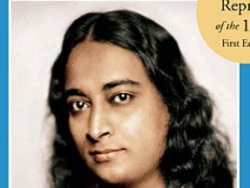
It is actually prana that sustains the body rather than food, water, and oxygen. Food seems necessary to life only because it is a source of condensed prana. Occasionally there is a rare individual who is able to rise above the need to eat and live by subtle energy alone. Yogananda writes about two such people in his spiritual classic, Autobiography of a Yogi. These two, Therese Neumann of Bavaria and Giri Bala from India, lived their entire adult lives without eating.
As a young girl, Giri Bala had been teased about her insatiable appetite. This roused in her intense determination to never eat again. One day, a saint materialized before her. “Dear little one,” he said in a voice of loving compassion, “I am the guru sent here by God to fulfill your urgent prayer. He was deeply touched by its very unusual nature. From today you shall live by the astral light, your bodily atoms fed from the infinite current.”
Therese Neumann, the famous Catholic stigmatist, spent her entire adult life without food. She took only a small communion wafer during her daily mass. Medical doctors frequently tested her to verify the apparent “miracle.”
Prana is too subtle for most people to perceive, but because it is directly connected to the breath, we exert an indirect influence on it by controlling our inhalation and exhalation, which is relatively easy to do.
The technique, Hong-Sau, involves a breathing exercise. Its purpose is not to free you from food, but rather to free you from restless thoughts. Its ultimate purpose is to completely internalize your attention. In fact, practiced correctly, it will help you achieve total concentration. Only then can you experience the deepest states in meditation and feel your unity with God.
The sounds used in this technique, Hong (rhymes with “song”) and Sau (sounds like “saw”), are mantras. A mantra is a sound formula that has a certain power. In some cases it produces healing or strength or devotion. The special effect of Hong- Sau, however, is to calm the breath/prana and internalize our awareness.
Deep meditation comes spontaneously when our whole being is internalized and focused at the point between the eyebrows (the spiritual eye, or Christ center), the seat of concentration. Hong-Sau works with breath, attention, and a mantra to focalize all our life-force at this center. As breath slows and our internal focus deepens, life-force withdraws from the senses into the astral spine, “turning off” the distracting “sense telephones.” Just as at night when life-force withdraws from the senses in sleep, so too is it released from the senses and drawn within during deep meditation, but with a significant difference. Instead of subconscious dreams and the false peace of nightly slumber, meditation awakens us to the superconscious realm of heightened awareness, soul peace and joy.