The Hong-Sau Technique is relatively simple but extremely important for meditation. It is best to practice it near the beginning of your meditation session, immediately after you have relaxed the body and a practiced a few rounds of regular breathing to relax the mind.
Begin by inhaling deeply and exhaling completely. As the next breath comes in, mentally chant Hong. Then, as you exhale, mentally chant Sau. Make no attempt to control the breath. Let it flow naturally as you observe it coming into and out of your body. Feel as if the breath itself is silently making the sounds of Hong and Sau. In the first phase of the technique, feel the breath at the point where it enters the nostrils.
Be as attentive as possible. It will help to bring the forefinger of your right hand slightly toward the palm as you inhale and relax it back as you exhale. If you have difficulty feeling the breath, you can concentrate, for a while, on the breathing process itself, feeling your diaphragm and chest expand and contract.
Gradually, as your awareness becomes more interiorized, try to feel the breath higher and higher in the nose. Be sure that your gaze is kept steady at the point between the eyebrows throughout your meditation. Don’t allow your eyes to follow the movement of the breath. Continue to relax and concentrate more deeply until you can feel the breath high in the nasal cavity. You can then feel it awakening and energizing the Christ center at the point between the eyebrows. If you find that your mind has wandered, simply bring it back to an awareness of the breath and the mantra.
At no time during the practice of this technique should you make any effort whatsoever to control the breath. Let it flow naturally. Gradually, you may notice the pause between each breath becoming longer, especially after exhalation. Enjoy these spaces as a natural result of calmness. You can increase your interiorization by feeling that you are the breath itself and that you are expanding into endless space at the
spiritual eye.
As you grow very calm, you may notice the breath becomes so shallow (or the pauses so prolonged) that it hardly seems necessary to breathe at all. Try to increase this feeling and the sense of freedom that accompanies it. In the deepest practice of Hong-Sau, life-force internalizes so completely that the body enters into a state of “suspended animation” and the breath stops altogether. You need not worry; there is no danger. It is quite natural for the breath to pause, but don’t try to stop the breath through an act of will. We must surrender the breath. “Breathlessness” is deeply refreshing and allows the soul to transcend the limitations of body consciousness. Simply accept this state gratefully and joyfully if it comes.
Start by practicing Hong-Sau for five to ten minutes at a time. If you are meditating for more than twenty minutes at a sitting, you can practice Hong-Sau for up to one half of your meditation time. End your practice of the technique by taking a deep breath, and exhaling three times. Then, keeping your mind focused and your energy completely internalized, try to feel God within as peace, love, or joy.
The amount of time you practice the Hong-Sau technique is entirely up to you. But, generally speaking, progress in meditation is determined by a combination of intensity of effort and amount of time spent. A few minutes of Hong-Sau is unlikely to take you into deep states, although it should help calm and concentrate your mind.
If you want to achieve greater results you will need to increase both the duration of Hong-Sau and the total time of your meditations.
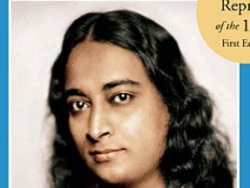
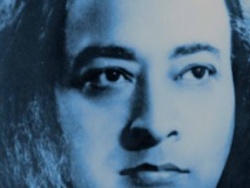
Paramhansa Yogananda said that if one aspires to become a master of yoga in this life, Hong-Sau should be practiced for at least two hours a day. Yogananda himself, while still a boy, often practiced it for eight hours at a sitting. But you must judge for yourself how much time you can dedicate to your meditations. Don’t artificially increase the time beyond your capacity to enjoy, lest you create mental resistance to
practicing. Remember, meditation is meant to bring you satisfaction and joy.
Your practice of meditation should be balanced between time spent practicing specific techniques and periods of inner enjoyment of the states stimulated by the techniques. As you feel peace, joy and calmness, or perhaps experience a sense of expansion and deep stillness within, try to absorb yourself in these states and enjoy.
As you dive deeper and your spirit soars, you will learn to forget the physical body.
It is very important to make a conscious effort to concentrate as you begin each meditation period. If you allow your mind to wander within the first couple of minutes, you will have an uphill battle reining it in. But, if you immediately focus your thoughts, you will find meditation quite easy and very enjoyable.
Always end your meditations with a prayer for those who are close to you and for the world in general. Project in ever widening circles whatever love and peace you feel in meditation. Think of yourself as an abundant spring, fed by an underground river, offering your life-sustaining waters to everyone who will receive them.