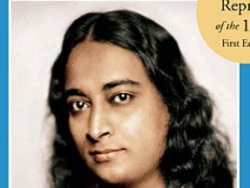
The various aspects of God mentioned above are fully manifested only in a God-realized soul. A true guru is completely free from any egoic identification, any separation from God. Such a soul incarnates to teach and free others. Even if you don’t yet feel an urge to be a disciple of such a one, it is still helpful to meditate on their consciousness. This can be done in several ways.
It is very beneficial to contemplate the life and words of a God-realized soul. See the episodes in their lives as models for how to improve your own attitudes and behavior. Try to see the meaning behind their actions, the teaching implicit in their conduct. The writings of a great soul carry a transforming power within them. Once a disciple told Paramhansa Yogananda about how he had been changed by reading his book, Autobiography of a Yogi. Yogananda replied, “That is because I put my vibrations into it.”
When you meditate on the words or life of a guru, feel that he or she is guiding your thoughts, instructing and uplifting you. Attune yourself to the guru’s consciousness. Therese Neumann of Bavaria, a 20th century saint, would regularly enter a state of ecstasy through the contemplation of Christ’s passion. She was so deeply identified with Christ that she expressed in her own body the wounds of the cross—she was what is known as a “stigmatist”.
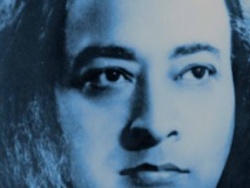
As we mentioned in the last lesson, you can also meditate on the guru, visualizing him or her in meditation. Magnetically draw their consciousness to you by looking deeply into the saint’s eyes. Feel as if you are becoming one. As you become more attuned to such a soul, you will feel a sense of compassionate friendship, a silent presence guiding and protecting you. You can increase this feeling by thinking that the guru is always with you. As Yogananda put it, “To those who think me near, I will be near.”